
Application / Water & Wastewater Treatment
Water & Wastewater Treatment Gas Detection and Sensor Selection
Two ledgers at once: H₂S and NH₃ for fence-line compliance, digester methane and chlorine for human safety — in confined spaces tested in sequence.
- 19.5–23.5% vol Confined-space oxygen window (OSHA 1910.146)
- 10 ppm H₂S exposure limit — also the odour indicator
- 1 ouE/m³ Odour threshold defined by EN 13725
- 5.0% vol Methane LEL — biogas alarm at 0.5% vol
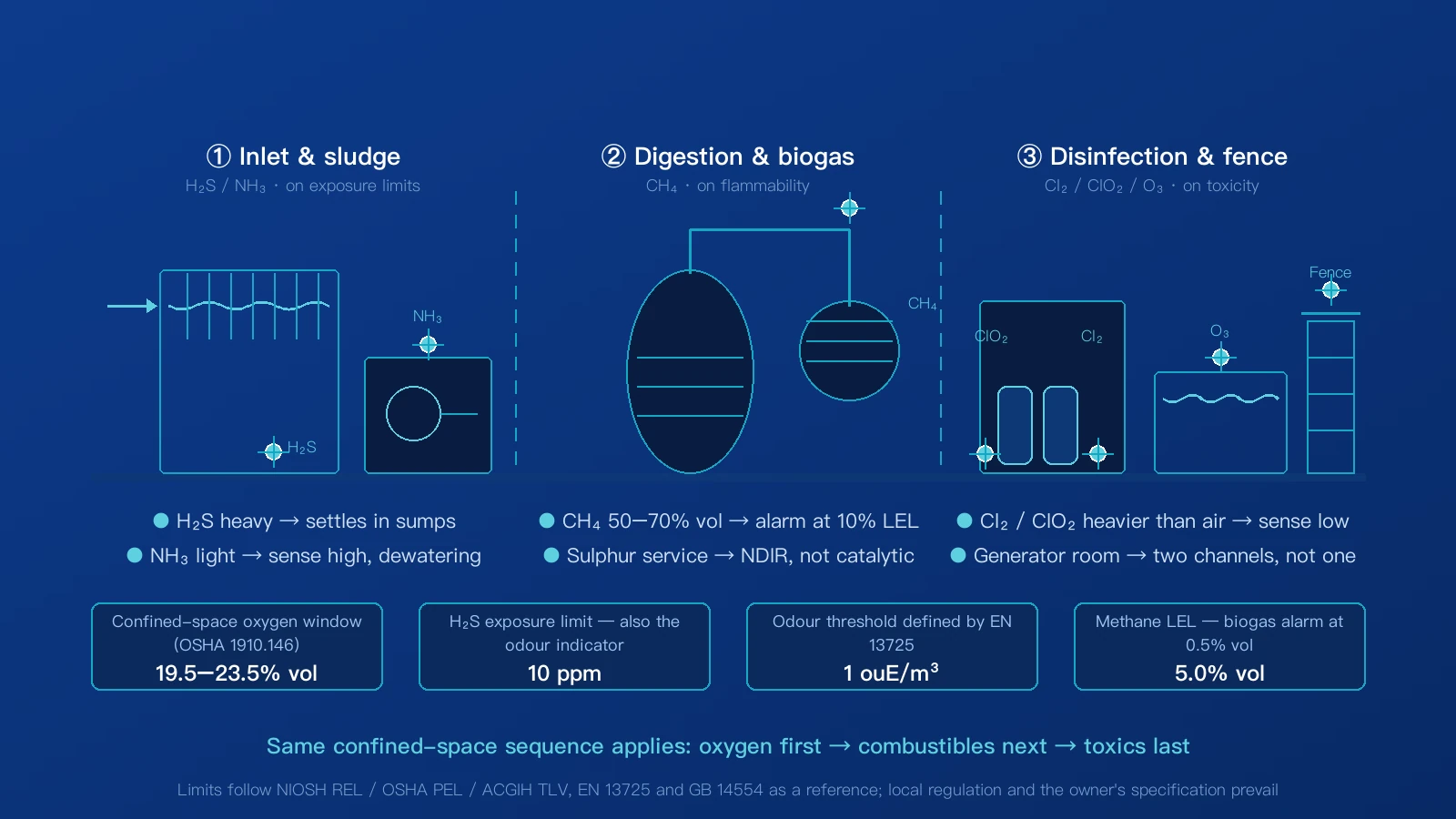
Inlet Works and Sludge Handling: the Two Faces of H₂S
The inlet works, screen channels, wet well and sludge dewatering building carry the highest hydrogen sulphide concentrations on site — not because the wastewater smells worst there, but because those stages run anaerobic: sulphate-reducing bacteria break down organics in the absence of oxygen and release H₂S continuously. It is heavier than air (relative density 1.19), so it collects in sumps, tank floors and trenches instead of dispersing with the airflow.
H₂S therefore plays two roles here. For compliance it is one of the primary fence-line odour indicators and a required channel in most jurisdictions; for safety it is one of the confined-space entry criteria — and the one least suited to human judgement.
Anaerobic Digestion and Biogas: Methane Goes to NDIR, Not Catalytic
Anaerobic digestion converts the organics in sludge into biogas whose typical composition is 50–70% vol methane and 30–50% vol carbon dioxide, with hydrogen sulphide at hundreds to thousands of ppm. That mixture's dual nature is clearest at selection time: methane's 5.0% vol lower explosive limit makes it the explosion hazard, with alarms set at 10% LEL (about 0.5% vol), while hydrogen sulphide here is less a safety channel than an outright corrosion problem — it attacks pipework, boilers, desulphurisation units and generator sets.
Precisely because biogas carries sulphur, the methane channel should not be catalytic. Poisoning of the catalytic bead by sulphur compounds and silicon vapour is irreversible: sensitivity falls away with no fault signal at all — readings drift low while the system looks perfectly healthy. That is the most dangerous failure mode there is. Infrared NDIR has a characteristic methane absorption band, no poisoning mechanism and no dependence on oxygen, which makes it the default in digesters, gas holders and boiler houses. Split the range by purpose: 0–100% LEL for leak warning, 0–100% vol for digester process control.
Chlorination, Chlorine Dioxide and Ozone: Three Disinfectants, Three Layouts
The gas risk in disinfection comes from the chemicals themselves. Chlorine gas, once vaporised, is heavier than air (relative density 2.5) and travels along the floor and into trenches, so probes belong low; the reaction inside a chlorine dioxide generator produces chlorine dioxide together with chlorine as a by-product, which means the generator room usually needs two independent channels rather than one probe on the assumption that chlorine covers it; ozone is monitored at the generator room and above the contact tank, and its exposure limit sits far below the odour threshold — by the time anyone smells it, the limit is long exceeded.
All three disinfectants are alarmed on toxicity, never on flammability: their occupational limits sit at ppm or sub-ppm level while any flammability criterion is far higher, so a set point on LEL means an alarm that never sounds. Prefer channels with resolution down to the 0.01 ppm order and the option of an acid-gas filter, because cross-response within the halogen family is all but unavoidable in a disinfection room.
Fence Line and Final Effluent: Olfactometry Owns Compliance, Sensors Own Operations
Fence-line odour is the complaint driver in this industry and the most widely misunderstood part of it. Olfactometry, as defined by EN 13725, is the only method that yields compliant odour concentration (ouE/m³). A sensor array supplies continuous operational data: locating sources, triggering abatement, and aligning complaint times with process events. The two divide the work rather than replace each other — submitting a sensor reading as compliance data will not stand up in most jurisdictions.
Once the division is clear, the configuration writes itself: instrument the inlet works, biological tanks, sludge dewatering and the fence line separately so process swings can be told apart from equipment faults; wire alarm outputs into the biofilter, scrubber or spray system so abatement starts on exceedance instead of when someone notices; and run a period of side-by-side comparison against the plant's own olfactometry results to establish an on-site correlation — one that cannot be transplanted to another plant, because influent source, process and season all shift it.
Gases to Monitor in Water & Wastewater Treatment
One process line carries three orders of reference: sulphides in the inlet works judged against exposure limits, digester methane against flammability, and chlorine and ozone in the disinfection rooms back on ppm-level toxicity — with the screen channels and digesters being confined spaces first of all.
| Gas | Typical Range | Recommended Principle | Duty Notes |
|---|---|---|---|
| Hydrogen sulphide (H₂S) | 0–20 / 0–100 ppm | Electrochemical (smart digital output) | Inlet works, screen channels, wet well, sludge dewatering and digesters; heavier than air (relative density 1.19), so sense low and in trenches. Smell fatigues fast at high concentration, so the nose is not an instrument. |
| Ammonia (NH₃) | 0–50 / 0–200 ppm | Electrochemical (smart digital output) | The dominant odour component in sludge thickening, dewatering and storage; lighter than air (relative density 0.6), so sense high — the opposite of hydrogen sulphide. Alarm on toxicity. |
| Methyl mercaptan (CH₄S) | 0–10 / 0–50 ppm | Electrochemical | Extremely low odour threshold — the main reason a very low concentration still smells terrible. Give it its own channel to separate the low-threshold mercaptan contribution from the total odour. |
| Methane (CH₄) | 0–100% LEL / 0–100% vol | NDIR infrared | The main constituent of digester biogas (50–70% vol); LEL 5.0% vol with alarms at 10% LEL. In sulphur-bearing service use NDIR rather than catalytic — the bead is poisoned permanently and reports no fault. |
| Carbon dioxide (CO₂) | 0–5000 ppm / 0–100% vol | NDIR infrared | A biogas constituent (30–50% vol) and a digester process variable; at high concentration it displaces oxygen, making it a confined-space hazard in its own right. |
| Oxygen (O₂) | 0–25% vol | Electrochemical (smart digital output) | The first item in confined-space entry, with 19.5–23.5% vol as the admissible window; test before any work in screen channels, wet wells, digesters or pipe galleries — and test at the opening and at depth separately. |
| Carbon monoxide (CO) | 0–500 / 0–1000 ppm | Electrochemical (smart digital output) | One of the four confined-space entry channels; maintenance work with engines, welding and cutting adds CO around tanks and pump rooms. |
| Chlorine (Cl₂) | 0–5 / 0–10 ppm | Electrochemical (smart digital output) | Chlorination rooms and chlorine dioxide generator rooms; heavier than air (relative density 2.5), so sense low and in trenches. Set on toxicity and ask for the halogen cross-sensitivity table. |
| Chlorine dioxide (ClO₂) | 0–5 ppm | Electrochemical | The product of a chlorine dioxide generator, coexisting with chlorine as a by-product — the generator room normally needs two independent channels rather than one shared probe. Heavier than air as well. |
| Ozone (O₃) | 0–5 / 0–100 ppm | Electrochemical (smart digital output) | Ozone generator rooms, contact tanks and off-gas destruct units; the exposure limit sits far below the odour threshold, so smelling it means the limit is already well exceeded. |
| Total VOC (TVOC) | 0–200 ppm | Electrochemical (smart digital output) | The inlet works, equalisation and emergency tanks wherever industrial effluent is received; use a ppm-level criterion against the OEL, and move to PID only when individual components must be resolved. |
Limits follow NIOSH REL / OSHA PEL / ACGIH TLV together with EN 13725 and GB 14554, as a selection reference only. This page does not replace a plant's gas detection system design: set points, interlock logic and point counts must follow the structure type, process zoning, ventilation design and local regulation.
Recommended Models for Water & Wastewater
Six stages covered — inlet works, biological tanks, sludge dewatering, digestion and biogas, disinfection and the fence line: H₂S and NH₃ on ppm-level electrochemical, digester methane on poison-resistant NDIR, and O₂ with CO for confined-space entry, all on one digital output scheme so a probe swap changes no wiring.
12 gas categories covered
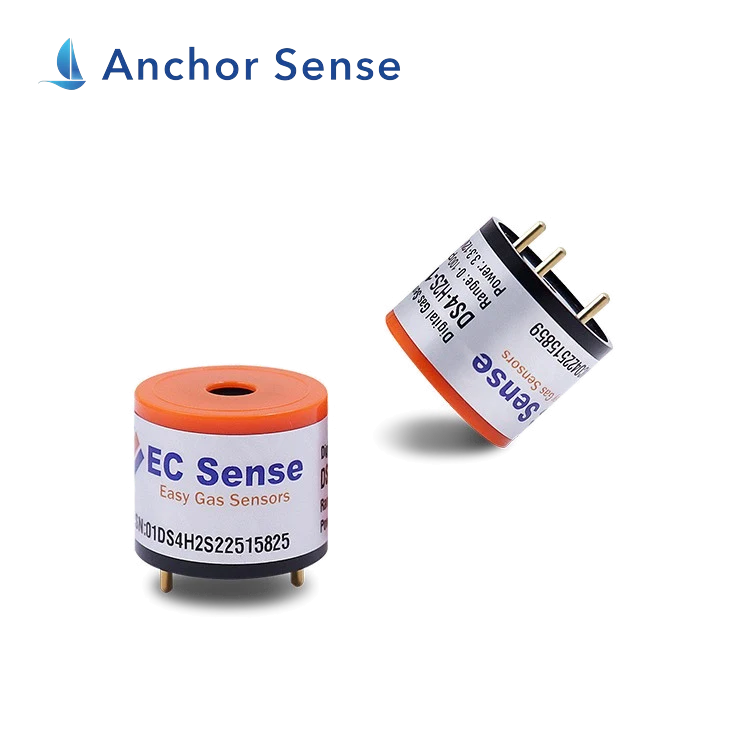
DS4-H2S-100 Smart Hydrogen Sulfide Gas Sensor
Printed Solid-Polymer Electrochemical (smart digital output)
EC Sense DS4 smart Hydrogen Sulfide sensor, 0 – 100 ppm range, 0.1 ppm resolution, UART digital output, factory-calibrated
View Details → DS4-NH3-100 Smart Ammonia Gas Sensor
Printed Solid-Polymer Electrochemical (smart digital output)
EC Sense DS4 smart Ammonia sensor, 0 – 100 ppm range, 0.5 ppm resolution, UART digital output, factory-calibrated
View Details →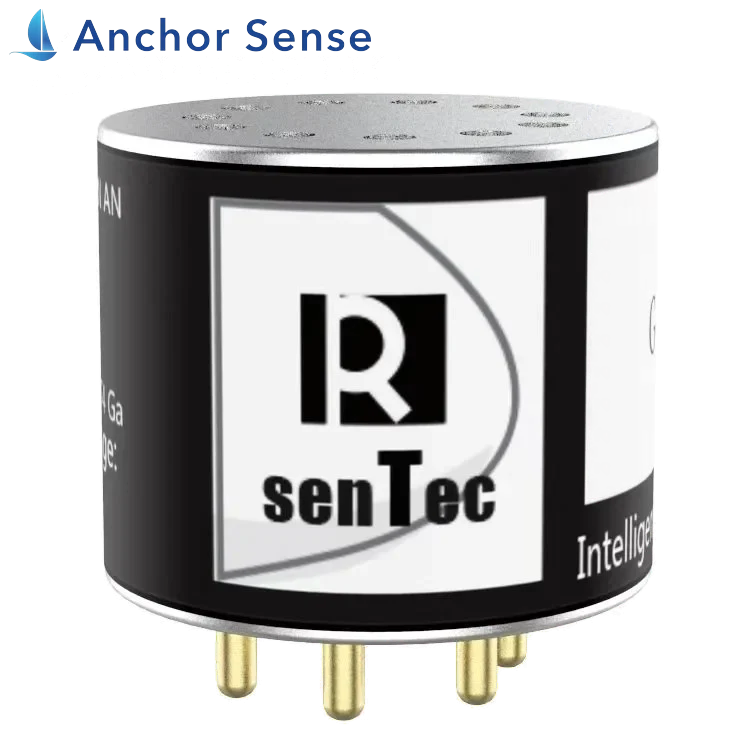
G4111 Methane NDIR Infrared Gas Sensor
Non-Dispersive Infrared (NDIR, dual-wavelength optical path)
Shanghai Yixin G4111, 0 – 100% LEL range, dual-wavelength NDIR detection
View Details → DS4-Cl2-10 Smart Chlorine Gas Sensor
Printed Solid-Polymer Electrochemical (smart digital output)
EC Sense DS4 smart Chlorine sensor, 0 – 10 ppm range, 0.01 ppm resolution, UART digital output, factory-calibrated
View Details → DS4-O2-25% Smart Oxygen Gas Sensor
Printed Solid-Polymer Electrochemical (smart digital output)
EC Sense DS4 smart Oxygen sensor, 0 – 25 %vol range, 0.01 %vol resolution, UART digital output, factory-calibrated
View Details →Related Series
Frequently Asked Questions
Catalytic methane sensing is cheaper — why recommend NDIR for biogas?
Because biogas contains hydrogen sulphide, and a catalytic sensor works by oxidation at the bead surface: sulphur compounds, silicon vapour and halogens poison it, and the poisoning is irreversible — sensitivity falls away with no fault signal of any kind. Readings drift low while everything looks healthy, which is the most dangerous failure mode there is. NDIR has a characteristic methane absorption band, no poisoning mechanism and no dependence on oxygen, making it the default in digesters, gas holders and boiler houses. The genuinely cheaper option is the one priced after replacement and calibration costs are counted.
Why can't a chlorine dioxide generator room use a single chlorine probe?
Because the generator produces both gases at once. Chlorine dioxide is made by reacting sodium chlorite or chlorate with acid, and chlorine is present alongside it throughout the reaction and dosing. Their exposure limits and alarm points differ, so monitoring one leaves the other undefended. Fit two independent channels — and note that both gases are heavier than air, so the probes belong low, in trenches, not high on the wall.
Should the H₂S alarm follow 10 ppm or the odour limit?
It depends on what the channel is for, and the two purposes should not share one set point. Personnel safety and confined-space entry follow the occupational exposure limit — for H₂S the 8-hour limit sits at 10 ppm. Fence-line and neighbourhood impact follow the local odour standard's concentration limit or odour units. The magnitude, the basis and the response requirement all differ, so keep the safety channel and the environmental channel on separate set points and separate records, and label each one on site so nobody harmonises them later.
Can sensors replace olfactometry for compliance reporting?
No. Compliant odour concentration (ouE/m³) can only be produced by dynamic olfactometry as defined by EN 13725. A sensor array provides continuous operational data for locating sources, triggering abatement and aligning complaint times with process events. If an equivalent OU figure is genuinely required, run a period of side-by-side olfactometry at your own plant to establish the correlation — and remember it cannot be carried across to another plant, because influent source, process and season all shift it.
Do screen channels and digesters need portable or fixed detectors?
They have different jobs, and in practice you need both. Fixed detectors handle continuous monitoring and ventilation interlock across areas people pass through or where gas accumulates; portables handle pre-entry testing and monitoring during the job itself. Confined spaces are tested in sequence — oxygen first, then combustibles, then toxics — with readings taken both at the opening and at the depth a person will actually reach, which no fixed point can cover.
Send Us the Structure List and Process Zoning
The treatment scale and process (A²O, SBR, MBR, oxidation ditch and so on), influent and effluent quality and whether industrial effluent is received, the sludge treatment and digestion route, how biogas is used, the disinfection process (chlorine gas, sodium hypochlorite, chlorine dioxide, ozone or UV), the structures and points to be monitored, whether fence-line odour monitoring is included, and the power and communications available.
Contact us